
How Quickly Can Mold Grow After a Basement Flood in Utah County?
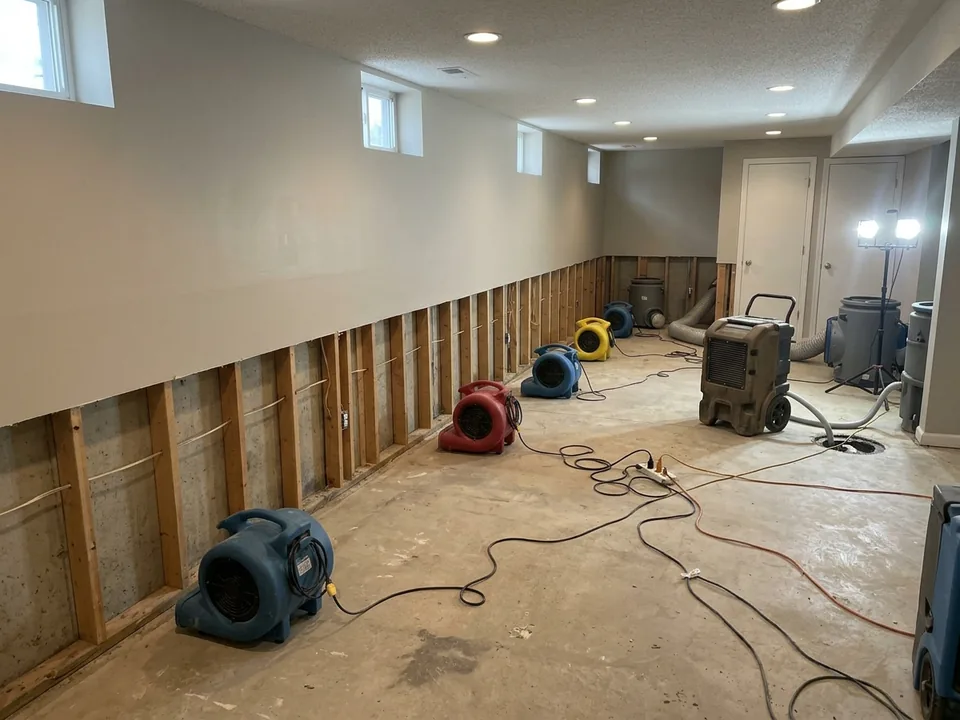
Mold spores naturally present in indoor air can begin germinating on damp drywall paper, carpet backing, and wooden framing within 24 to 48 hours of a basement flood. Fast mechanical water extraction and commercial Low-Grain Refrigerant (LGR) dehumidification keep indoor humidity below 50% so dormant spores cannot colonize wet building materials.
Many homeowners across Eagle Mountain, The Ranches, SilverLake, and Saratoga Springs assume Utah's semi-arid desert climate protects their basements from mold. That assumption is one of the costliest mistakes after a leak. Once water enters an enclosed, below-grade basement—whether from a ruptured water heater, a failed sump pump, or alkaline clay-soil groundwater seepage—the concrete envelope traps vapor like a sealed terrarium. Even when outside humidity in Cedar Fort or Fairfield sits at 18%, a flooded basement with wet carpet and closed doors can climb past 80% relative humidity in less than six hours.
What Happens Inside Wet Basement Materials Hour by Hour?
Water damage transitions from a simple extraction job into a microbial remediation problem along a predictable biological clock—understanding each window shows why same-day mitigation saves thousands of dollars.
| Elapsed Time | Physical & Biological Changes | Impact on Restoration Scope |
|---|---|---|
| Hours 0–4 | Water spreads across slab seams, soaks carpet padding, and begins wicking up paper-faced drywall and MDF baseboards. | Ideal window for emergency water extraction; most structural framing and clean carpet can still be saved. |
| Hours 4–24 | Drywall gypsum softens and swells; particleboard shelving and MDF trim delaminate; indoor relative humidity climbs sharply. | Musty odors appear; wet carpet cushion usually requires removal so subfloor concrete and bottom plates can dry. |
| Hours 24–48 | Dormant mold spores germinate on organic cellulose (drywall backing paper, cardboard boxes, wood dust, carpet tack strips). | Critical cutoff window; without commercial LGR dehumidification, secondary microbial growth begins behind baseboards. |
| Hours 48–72+ | Visible fungal colonies establish inside insulated wall cavities; wooden sill plates swell and warp; clean water degrades to Category 2/3. | Scope shifts from basic dry-out to controlled 24-inch drywall flood cuts, containment, HEPA air scrubbing, and antimicrobial treatment. |
Why Do Box Fans and Open Basement Windows Often Make Mold Worse?
Pointing portable box fans at damp basement walls without running a commercial dehumidifier speeds up evaporation into trapped indoor air—raising room humidity and pushing moisture into dry closets, upstairs floor joists, and cold exterior foundation corners.
Homeowners frequently grab two or three household fans from the garage and leave them blowing across soaked basement carpet for a weekend. While the top fibers of the carpet may feel drier by Sunday night, three hidden problems are unfolding simultaneously:
- Saturated Carpet Cushion Acts as a Reservoir: Rebond foam carpet pad is engineered to hold its shape under foot traffic, which means it also holds gallons of water against the concrete slab like a dense sponge. Surface air from a box fan cannot penetrate beneath carpet latex backing.
- Paper-Faced Drywall Wicks Moisture Upward: Capillary action pulls water 12 to 24 inches up the back paper of basement drywall—often right behind vinyl cove base or painted wood trim—where room airflow never reaches.
- Fiberglass Wall Insulation Traps Dampness Against Studs: Most modern Utah County basements have insulated exterior stud walls with plastic vapor barriers. Once water enters that wall cavity, fiberglass batts sag and hold moisture directly against wood framing and concrete foundation walls for weeks unless selectively opened and removed during professional basement flood cleanup.
How Independent Restoration Crews Stop Mold Before It Starts
Preventing post-flood mold is not about spraying bleach over wet surfaces—it is about removing liquid water, eliminating trapped moisture pockets, and driving structural wood and drywall back to dry standards within 72 to 96 hours.
When you call our Cedar Valley water damage restoration referral line, independent Utah County crews follow five proven moisture-control steps aligned with EPA moisture-control guidance and ANSI/IICRC S500 standards:
- Rapid Bulk Extraction: Weighted truck-mounted extraction pulls liquid water out of flooring before it can wick further into interior partition walls.
- Targeted Cavity Access: Technicians pull baseboards, inspect wall plates with pin moisture meters, and drill ventilation holes—or perform clean 24-inch drywall flood cuts—when thermal imaging confirms wet fiberglass insulation behind the sheetrock.
- Balanced Psychrometric Dehumidification: Commercial LGR dehumidifiers remove moisture vapor from the air continuously, holding relative humidity safely below 45% to 50% while high-velocity air movers strip boundary-layer moisture off framing lumber.
- EPA-Registered Antimicrobial Treatment: Where Category 2 groundwater seepage or Category 3 sewage backups occurred, technicians apply appropriate antimicrobial treatments to sanitized structural surfaces (never simply masking odor over wet drywall).
- Daily Moisture Verification: Crews verify every stud bay, sill plate, and subfloor seam returns to normal equilibrium moisture content before signing off on the dry-out—review our structural drying timeline guide to see what daily logs look like.
Why Bleach Does Not Solve Basement Mold on Porous Drywall or Wood
Chlorine bleach is mostly water and loses effectiveness rapidly on porous materials like wood framing, concrete block, and gypsum drywall—often adding extra moisture to the surface while failing to reach fungal hyphae rooted inside the fibers.
Furthermore, mixing bleach with residual ammonia or household cleaners inside an unventilated basement creates dangerous chloramine fumes. If water sat longer than 48 hours and you already see dark spotting along baseboards, drywall seams, or cardboard storage boxes, do not scrub it dry or point fans directly at visible growth—disturbing dry colonies releases spores into your basement return-air ductwork. Instead, shut down the furnace fan temporarily and arrange a proper moisture and containment inspection.
Cedar Valley Basement Mold-Prevention Checklist (Post-Leak & Seasonal)
Whether you are recovering from an active leak or protecting a finished basement ahead of Utah's spring snowmelt and late-summer monsoons, use this checklist to close off recurring moisture paths:
- Clear Basement Window Wells Twice a Year: Remove windblown sagebrush, leaves, and silt from window-well gravel drains in Eagle Mountain, Saratoga Springs, and Cedar Fort so sudden storms cannot back up against egress windows.
- Extend Downspouts 6 to 10 Feet Away from Clay Foundations: Expansive Utah County clay soil swells when roof runoff dumps next to the stem wall, opening hairline foundation cracks.
- Test Your Sump Pump & Battery Backup Every Spring: Pour a five-gallon bucket of water into the sump pit to confirm the float switch triggers smoothly and discharges freely outside.
- Keep Cardboard Off Basement Concrete: Store holiday bins and documents in sealed plastic totes on raised shelving—cardboard sitting directly on concrete wicks ground moisture and is usually the first item to grow mold during a flood.
- Inspect Unseen Crawl Spaces & Utility Closets: Rural homes in 84013 with adjoining crawl spaces should check vapor barriers annually and schedule crawl space water removal immediately if groundwater pools beneath floor joists.
- Plan Ahead for Mitigation Scope: Preview how quick Category 1 dry-outs compare to delayed mold-impacted tear-outs on our Cedar Valley water damage cost calculator.
Hidden Warning Signs of Post-Flood Mold Inside Finished Basements
Visible dark spotting on painted drywall is usually the last stage of a moisture problem—by the time mold breaks through exterior latex paint, colonies have often been growing on the hidden paper backing for days or weeks. Homeowners across Eagle Mountain, The Ranches, and Saratoga Springs should inspect for these early secondary indicators after any plumbing leak or storm event:
| Early Warning Sign | Where to Check | What It Usually Indicates |
|---|---|---|
| Swollen or Separated Baseboard Caulk | Along exterior foundation walls and bathroom door casings | MDF or pine trim absorbed hidden floor moisture wicking behind carpet tack strips |
| Bubbling Paint or Soft Drywall Paper | Lower 6 to 18 inches of finished basement walls | Active moisture trapped inside gypsum core or wet fiberglass wall insulation |
| Persistent Earthy Odor When Furnace Starts | Near basement return-air grilles and utility closets | Elevated humidity or damp organic debris inside concealed wall chases or crawl spaces |
| Rust Rings on Carpet Tack Strips or Metal Doors | Under lifted carpet corners and mechanical room frames | Standing water remained on the slab longer than 24–48 hours before drying |
If your basement experienced a sudden burst pipe or groundwater intrusion and you spot any of the signs above, do not seal the wall with stain-blocking primer until a moisture meter confirms the wood framing and drywall are completely dry. Painting over damp drywall traps water inside the wall cavity, accelerating microbial growth behind the paint film. Instead, connect with an independent Utah County crew via our Cedar Valley water damage restoration line to verify cavity moisture levels with infrared thermal imaging and pin meters.
Frequently Asked Questions
If my basement smells musty three days after a leak, does that mean mold is already growing?
A persistent earthy or musty odor 48 to 72 hours after water intrusion is a strong indicator of active microbial growth inside damp carpet padding, baseboards, or concealed wall cavities—even if walls look clean on the outside.
Can a home dehumidifier from a hardware store dry a flooded basement?
Small retail dehumidifiers remove far fewer pints per day and lose efficiency rapidly in cool 60°F basements. They are useful for routine summer humidity control, not for drying saturated framing after a flood.
Does homeowners insurance cover mold if I waited too long to dry a basement flood?
Most Utah homeowners policies cover mold only when it results directly from a sudden, covered water event that you acted promptly to mitigate—and many policies impose strict sub-limits on mold remediation, making same-day extraction essential.